

SABCA
SABCA connects engineering and manufacturing with the Engineered to Fly solution to manage complex product assemblies and streamline product data and workflows.
The core: propulsion systems | Aerospace
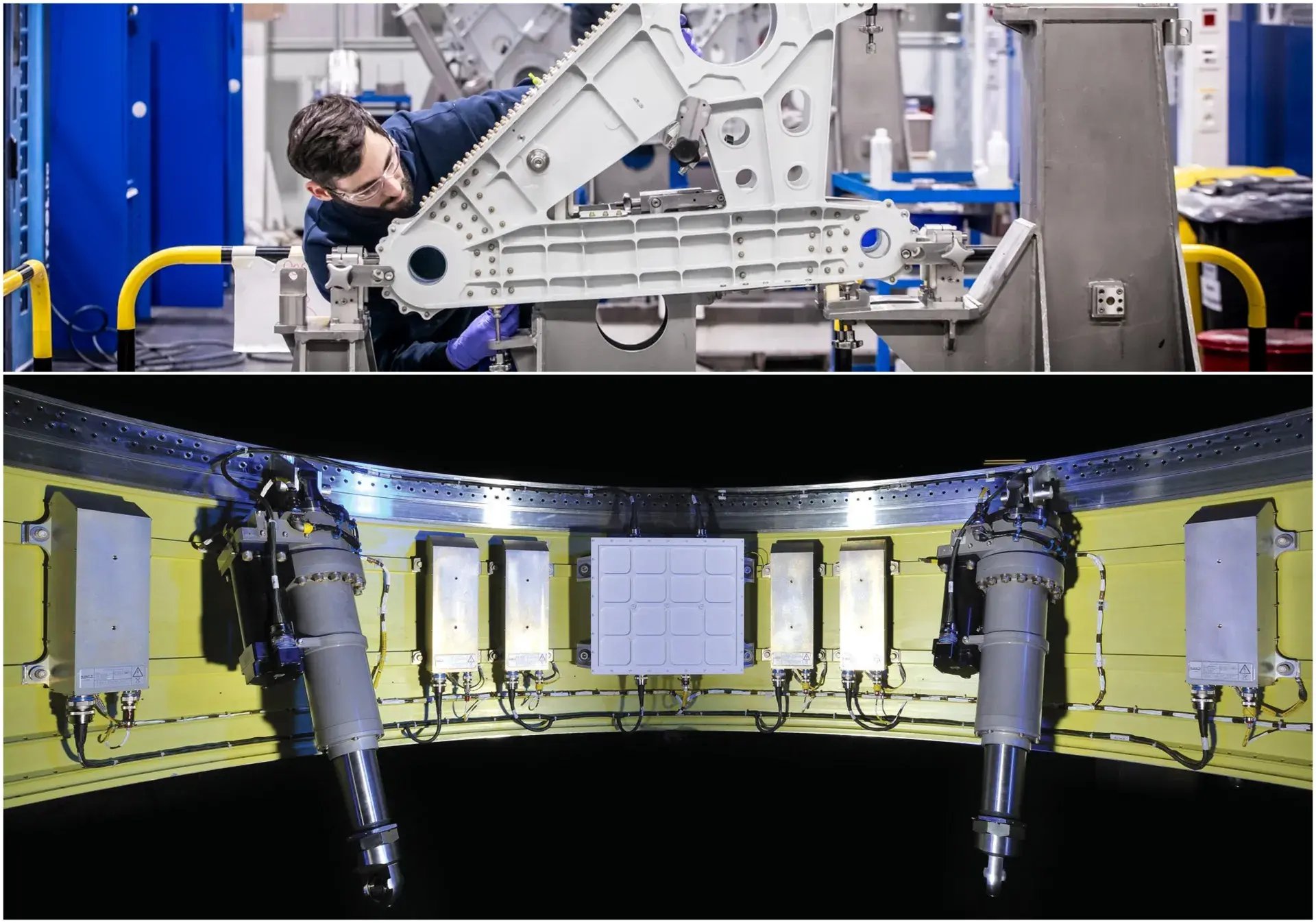
In the complex world of aerospace engineering, propulsion systems are the vital muscles, joints and nerves that enable aircraft to fly.
These advanced systems are found in almost every moving part of an aircraft and control essential components such as rudders, flaps, landing gear, brakes and doors, making them indispensable to the operation and safety of an aircraft.
 |
| 
Agility and performance supported by software
"Our mission is to design highly complex assemblies and structures and integrate them into any flight system," says Miguel Laduron.

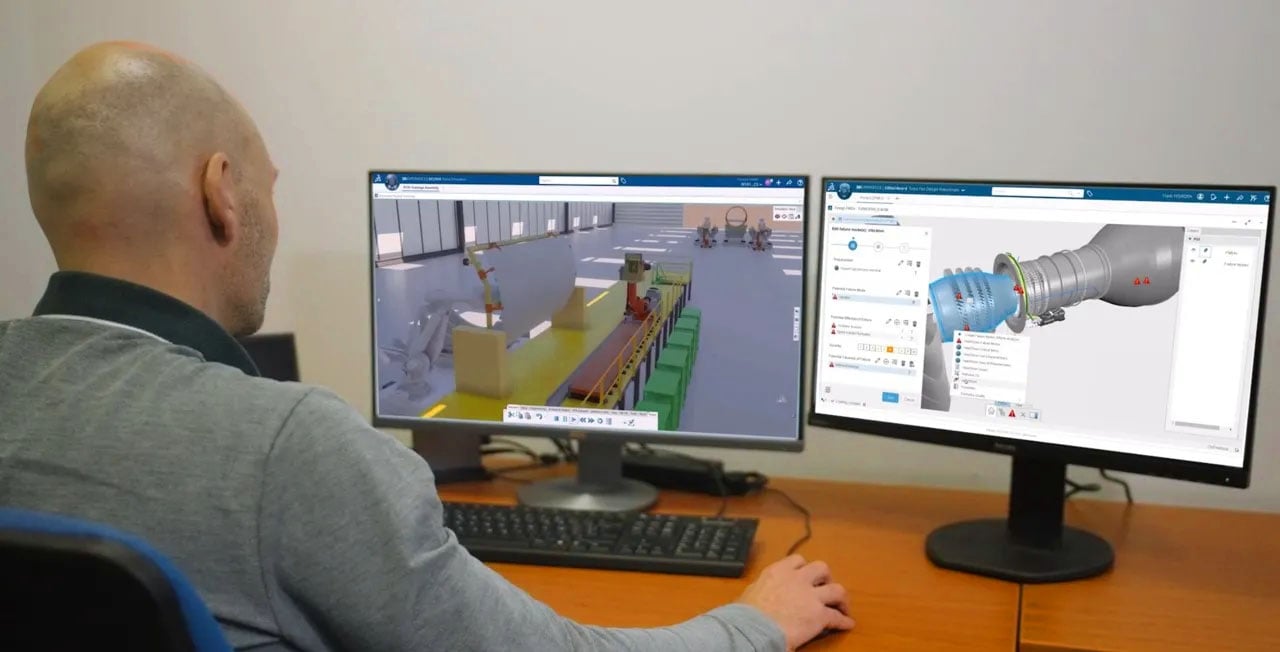
Overcoming inefficiencies with a connected PLM system
"It was essential to choose a state-of-the-art solution, because we will be relying on it for the next ten years, or even longer. The Dassault Systèmes platform was the most scalable and offered us the most possibilities for the future."
SABCA has relied on Dassault Systèmes solutions for over 20 years for all design and product lifecycle management (PLM). These solutions have been vital for its collaborations with aerospace industry leaders. Until recently, though, the company was hampered by communication barriers between design, engineering and manufacturing as each team used its own separate systems.
When modifications were made, engineering teams struggled to pinpoint specific changes, and manufacturing found it increasingly challenging to identify impacted components. This disconnect led to inefficiencies and increased the chance of costly errors.
The possibilities of Digital Twins
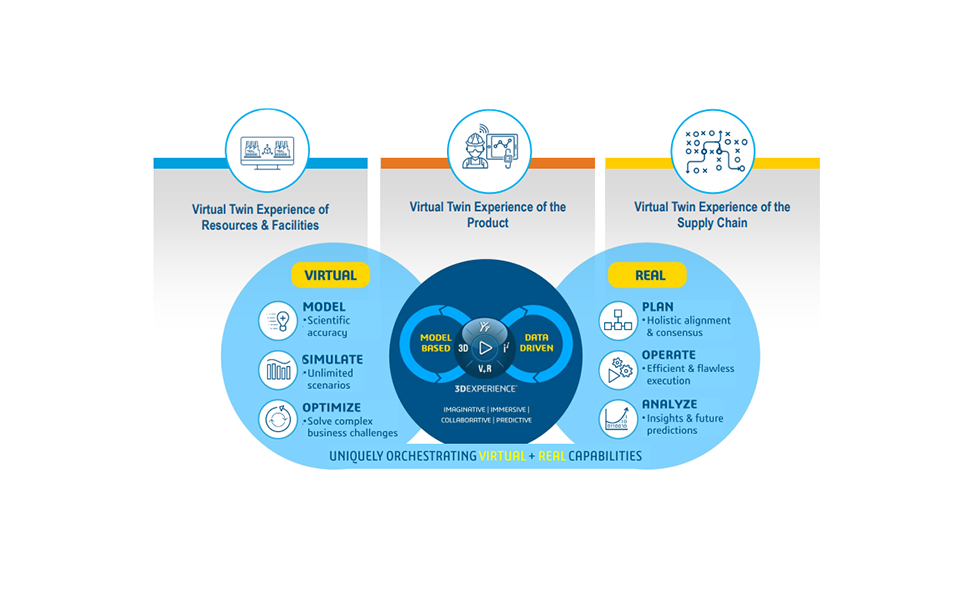
The plan is to make greater use of Dassault Systèmes' virtual twins to model and optimise factories and all production activities.
With the virtual twin, the company can simulate different scenarios, integrate live data from the shop floor, and effectively plan its workflows to increase production capacity.

“Virtual twins are a powerful tool, particularly for testing manufacturing processes and avoiding errors before transitioning to the physical world,” Venmans said.
“We already use virtual twins in some processes to improve our first-time-right ratio.”
Sustainable ambitions for aerospace
As the aerospace industry focuses on sustainable aircraft powered by carbon-free, renewable energy, SABCA is leading the way with a new generation of electric actuators that are lighter and consume less energy than traditional hydraulic systems. This advanced technology not only improves performance but also reliability and is expected to play a crucial role in the next era of aviation.
"The technology has its origins in our work in the aerospace sector, where we developed electromechanical actuators for the Ariane 5, Ariane 6 and Vega rockets," says Laduron. "We are now working with Airbus to integrate these advanced actuators into aircraft, and we are handling the entire product development process using the 3DEXPERIENCE platform."
.png?width=1920&height=1080&name=SABCA%20-%20In%20the%20spotlight%20at%20Farnborough%20Airshow%20%C7%80%20Dassault%20Syst%C3%A8mes%200-38%20screenshot%20(1).png)
Virtual Twins, the future
"As we further explore the potential of the virtual twin, we can prepare our factory for new assemblies while gathering feedback from the shop floor to compare the results in practice with what the virtual twin had predicted," Laduron added. "It will become a cornerstone of our business operations."
Why choose CATIA and Virtual Twins in partnership with Visiativ?
More than just software licences
Visiativ provides engineering expertise so that teams work more consistently and information remains within the organisation.
Our solutions are just as suitable for SMEs as they are for multinationals.
-
Virtual Twin

-
CATIA 3D CAD
/Catia-logo.png?width=120&height=30&name=Catia-logo.png)
-
3DEXPERIENCE